
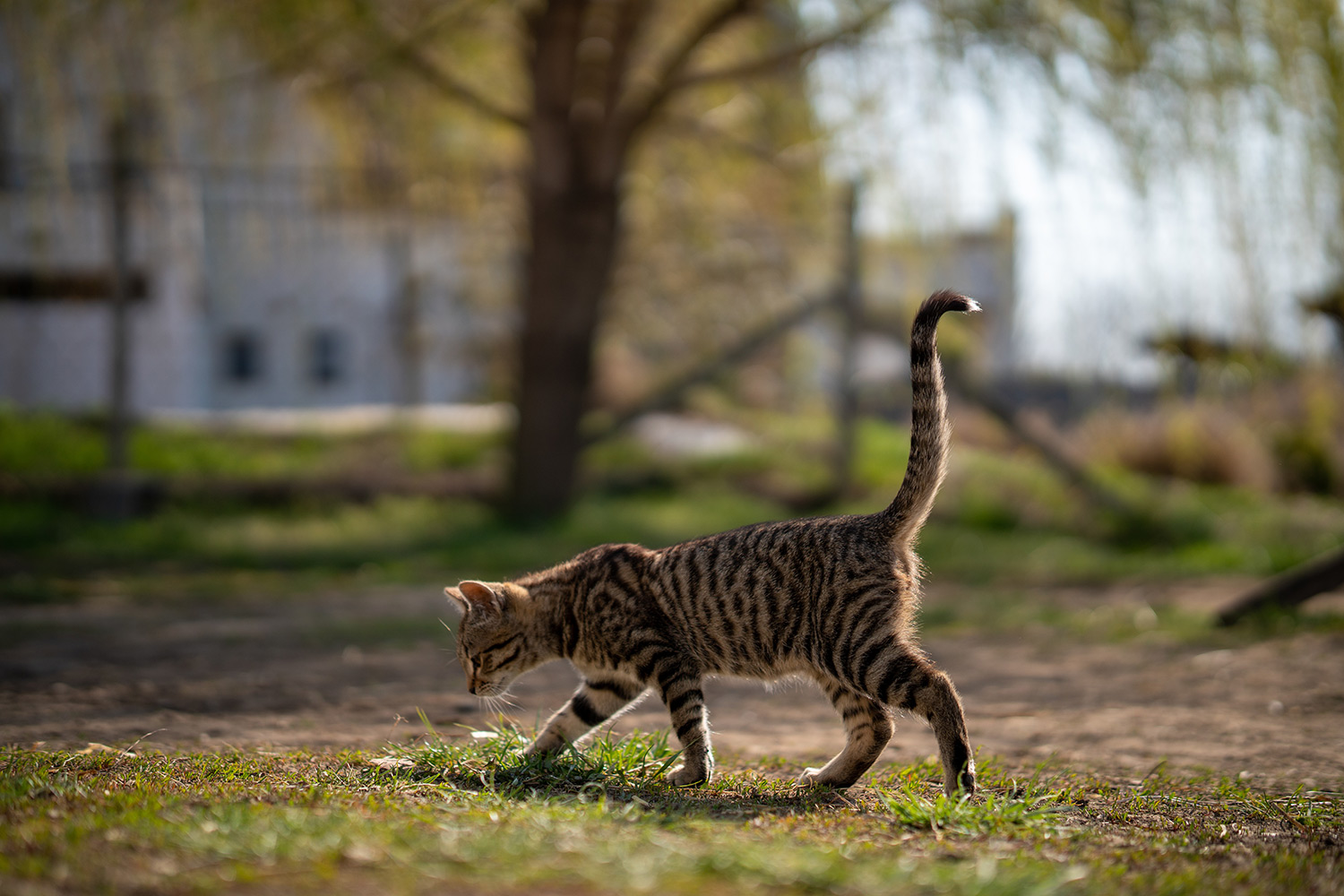
Cat Tail Wagging: Happy or Angry?
Learn to read cat tails: every movement tells a feeling
We know dogs are happy when they wag their tails, but with cats it can be the complete opposite. A cat's tail is an emotional barometer and every movement carries a different message.
Upright tail: "Hello, I'm happy!"
A straight tail with a slightly curved tip is one of the most positive signals.
- •If they greet you at the door with tail up: They're glad to see you.
- •If the tip quivers slightly: Excitement and joy are even higher.
Fast, hard wagging: "I'm uncomfortable, stop!"
Unlike dogs, fast wagging in cats generally indicates tension.
- •If the tail speeds up during petting: A "that's enough" warning may be coming.
- •If it starts hitting the floor: Irritation or frustration has increased.
Tip twitching: "I'm interested, I'm focusing"
During hunting or play, the tip twitches: Excitement and concentration.
- •While watching birds through the window: Prey drive is active.
- •If the tip twitches as they approach you: Could be positive excitement.
Puffed-up tail: "I'm scared or threatening"
If the tail puffs up to twice its size: Fear or defense reflex.
- •After a new animal or loud noise: A normal reaction.
- •If the body turns sideways: They're trying to look bigger.
Tail tucked between legs: "I'm very scared"
One of the most vulnerable and stressed positions.
- •At the vet or in a new environment: A normal reaction.
- •If you see it frequently at home: Chronic stress should be considered.
Conclusion
Your cat's tail is a rich communication tool. By learning to read different tail positions together with overall body language, you can better understand your cat's emotional state.
Discover your cat's signals with 10 questions
FREQUENTLY ASKED QUESTIONS
Want to understand your bond with your cat better?
Take the Free AnalysisRELATED ARTICLES
Does My Cat Love Me?
Cats show love differently than humans. They don't react as enthusiastically as dogs, so understandi...
Read
Does My Cat Trust Me?
Your cat's trust isn't measured by a single behavior like 'sitting in your lap.' Trust is the sum of...
Read
Why Does My Cat Sleep Next to Me?
Your cat choosing to sleep next to you is a deep sign of attachment and trust. Cats are at their mos...
Read