
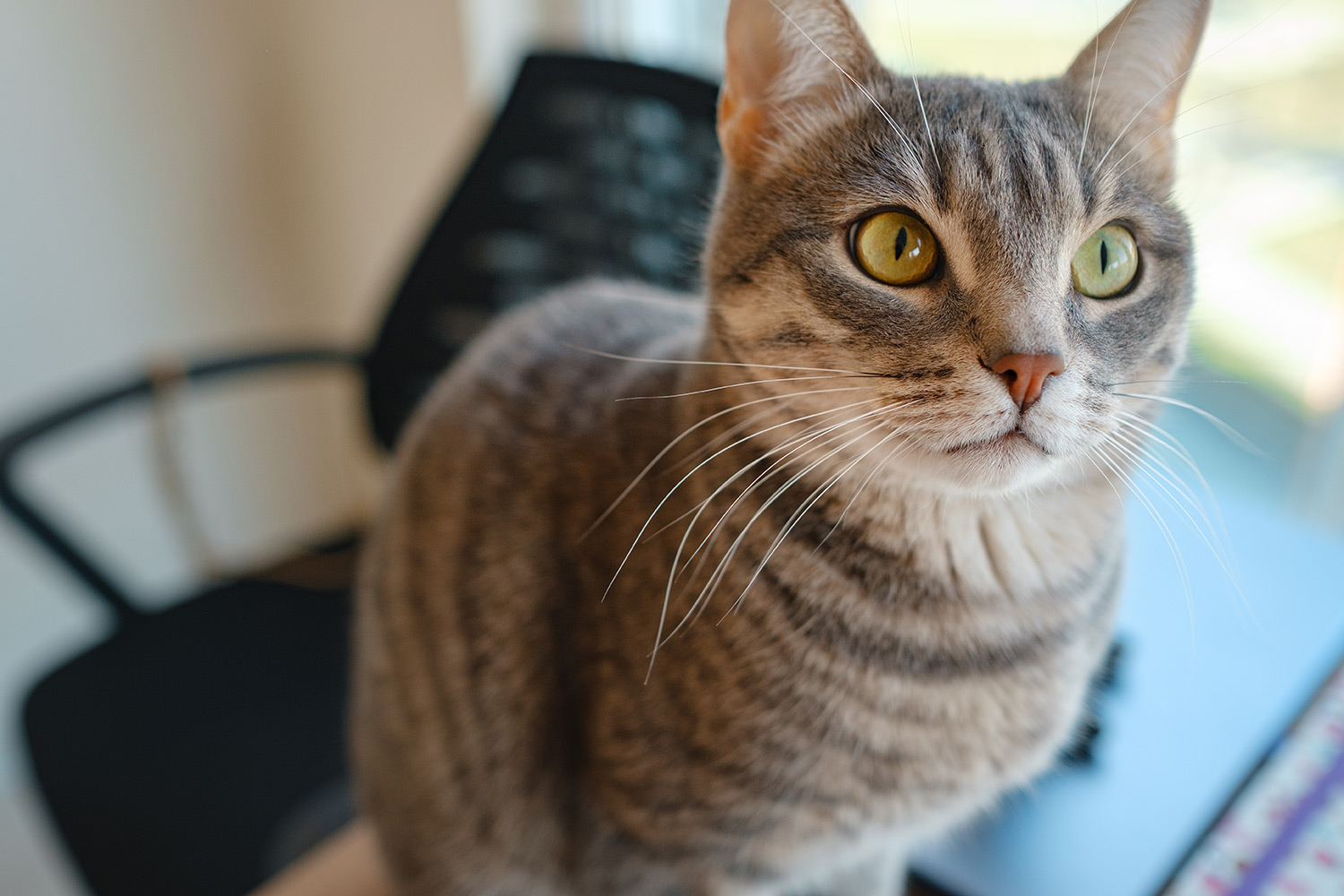
Why Does My Cat Meow?
Understanding your cat's vocal language
Here's a fascinating fact: adult cats rarely meow at each other. Meowing is a behavior they've developed specifically to communicate with humans. Your cat has literally learned to speak your language—in their own way.
The greeting meow: "Hello!"
- •Short, high-pitched meow when you come home or enter a room.
- •This is purely social and means your cat is happy to see you.
- •Respond with a gentle greeting—they appreciate acknowledgment.
The demand meow: "I want something"
- •Persistent, often louder meowing near food bowls, doors, or you.
- •Your cat has learned that meowing gets results.
- •Be careful not to reinforce excessive meowing by always responding immediately.
The chatty meow: "Let's talk"
- •Some cats are naturally more vocal than others.
- •Breeds like Siamese are known for being especially talkative.
- •If your cat meows while you talk to them, they're engaging in conversation.
The distress meow: "Something's wrong"
- •Low-pitched, prolonged meowing can indicate pain or discomfort.
- •If this is new behavior, a veterinary check is recommended.
- •Sudden changes in vocalization patterns should always be noted.
The nighttime meow: "I'm bored/hungry"
- •Common in cats who haven't had enough play during the day.
- •May also indicate hunger if feeding schedule doesn't match their natural rhythm.
- •Increase evening playtime and consider a late-night snack.
Conclusion
Your cat's meow is a personalized communication system developed just for you. By paying attention to the context, tone, and frequency of meowing, you can become fluent in your cat's unique language.
Discover your cat's signals with 10 questions
FREQUENTLY ASKED QUESTIONS
Want to understand your bond with your cat better?
Take the Free AnalysisRELATED ARTICLES
Does My Cat Love Me?
Cats show love differently than humans. They don't react as enthusiastically as dogs, so understandi...
Read
Does My Cat Trust Me?
Your cat's trust isn't measured by a single behavior like 'sitting in your lap.' Trust is the sum of...
Read
Why Does My Cat Sleep Next to Me?
Your cat choosing to sleep next to you is a deep sign of attachment and trust. Cats are at their mos...
Read